Arunachal Pradesh Investment Opportunities
Key Investment Sectors
Arunachal Pradesh presents resource-led and capability-driven opportunities across six key investment sectors. This dossier sets out the commercial rationale, enabling conditions, geographic context and principal routes for investor participation. Project availability, land, approvals and statutory clearances should be confirmed with APIIP and the relevant departments.
Agriculture & Horticulture
“India’s Fruit Basket” — more than 80% of crop production is by and large organic.
Tourism & Hospitality
India’s wildest and least explored tourism destination, with 14 major tourist circuits.
Hydropower
“India’s Hydropower Hub” — 40% of the country’s total potential, across eight major river basins.
Textiles & Handicraft
Textiles, handloom and handicraft from 26 major tribes, with eight GI-registered handloom products.
Education & Skill
Education and skill development, targeting 25,000+ employment and self-employment opportunities in five years.
Startup Arunachal
Nature-based entrepreneurship: 46% of incubated startups are women-led, and a DPIIT ‘Top Performer’ in 2022.
Agriculture & Horticulture
“India’s Fruit Basket” — more than 80% of crop production is by and large organic.
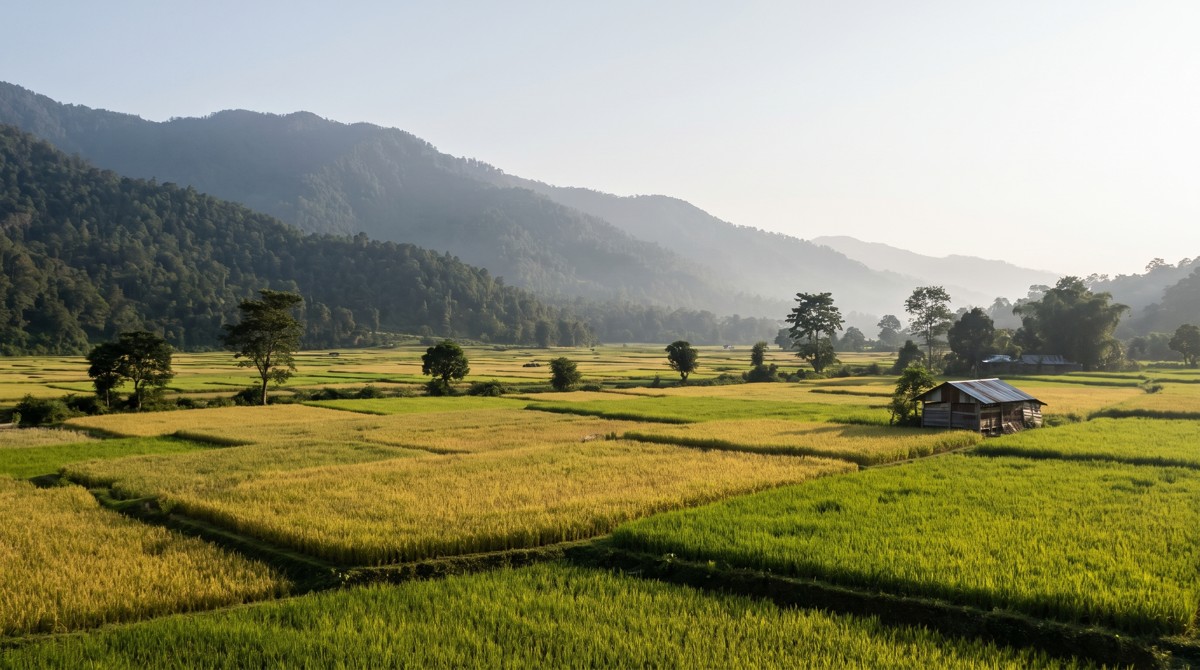
Arunachal Pradesh’s four agro-ecological zones support a diverse base of field crops, fruit, spices and off-season vegetables. More than 80% of crop production is broadly organic, while high-quality produce and substantial market surplus provide the raw-material base for aggregation, processing, storage, branding and distribution.
The opportunity remains underdeveloped at scale: only 14% of the State’s 2.5 million hectares suitable for field and fruit-crop cultivation has been utilised. Some 28,000 hectares are under organic cultivation, with potential extending to 0.3 million hectares, and approximately 103,723 metric tonnes of surplus production across seven key crops is available for processing and value addition.
Agriculture investment breakdown
-
Production & raw-material scale
An estimated 103,723 metric tonnes of surplus production across seven key crops can be made available for aggregation and processing. Only 14% of 2.5 million hectares suitable for field and fruit-crop cultivation has been utilised, while 28,000 hectares is under organic cultivation against a stated potential of 0.3 million hectares. The State ranks first in India for kiwi, is India’s second-largest producer of large cardamom, and holds the second-largest oil-palm area in the North East.
-
Cold storage & processing infrastructure
Four proposed cold-chain clusters at Bhalukpong, Kimin, Pasighat and Mahadevpur create a framework for pre-cooling, pack-house, grading, refrigerated storage and transport investments. These complement six proposed agri-horti networks and five agro-processing clusters planned in PPP mode. The networks are proposed or planned; current project availability requires confirmation.
-
Value addition & by-products
Kiwi, orange, apple, pineapple, cardamom, paddy, millet and ginger can support juices, preserves, spices, flour, noodles and other shelf-ready products. Additional value chains include bamboo shoots, incense, charcoal, mats, tiles and plywood; ramie and jute fibre products; and apiculture products such as honey, wax, royal jelly and pollen.
-
Contract farming & structured offtake
Contract farming, long-term procurement and structured offtake models can be evaluated to connect processors with producer groups, improve supply visibility and support consistent quality standards.
Project conditionConfirm the applicable policy framework, crop coverage, procurement terms and producer safeguards with the relevant department before project structuring.
-
Winery & distillery projects
Investor-led wineries and licensed distillery projects may be evaluated as a distinct route for value addition using kiwi and other suitable horticultural produce, supported by appropriate product development, packaging and market positioning. Operating fruit-wine businesses already demonstrate this value-addition model within the State.
Operating examplesProject conditionSubject to feedstock assessment, State excise policy, licensing, food-safety requirements and all other statutory clearances.
Proposed Agri-Horti & Cold-Chain Networks
Six proposed agri-horti clusters and four proposed cold-chain clusters define potential processing and logistics networks across the State. These are planned networks, not built infrastructure; produce shown against a district reflects the cluster serving it, not district-level output.
Districts
Select a district to view its supporting information.
Rivers and national highways are shown as light orientation trails drawn through the settlements each route serves, not as survey-traced lines. Gateway airports in Assam are the arrival points cited in the brochure.
Proposed processing networks
Six proposed agri-horti clusters
| Cluster | District coverage | Produce | Air | Road | Rail |
|---|---|---|---|---|---|
| Bhalukpong–Dirang | Tawang; West Kameng; East Kameng | Kiwi, Apple, Walnut, Rice, Cardamom | Guwahati (140 km) | NH-13 | Bhalukpong |
| Banderdewa–Kimin | Papum Pare; Lower Subansiri; Upper Subansiri; Kra Daadi; Kurung Kumey | Cardamom, Fisheries, Sugarcane, Kiwi, Walnut | Lilabari (40 km) | NH-15 | Naharlagun |
| Oyan | East Siang; Lower Siang; West Siang | Rice, Mustard, Fisheries | Dibrugarh (140 km) | NH-515 | Murkongselek |
| Namsai–Tezu | Dibang Valley; Lower Dibang Valley; Namsai; Tezu; Anjaw | Apple, Ginger, Kiwi, Rice, Turmeric | Dibrugarh (120 km) | NH-13 | New Tinsukia |
| Kanubari | Tirap; Changlang; Longding | Ginger, Rice, Fisheries, Millets | Dibrugarh (100 km) | NH-313 | Naharkatia |
| Likabali | Lower Siang; West Siang; Upper Subansiri | Pineapple, Kiwi, Orange, Millets, Rice | Lilabari (100 km) | NH-15 | Silapathar |
Proposed cold-chain networks
Four proposed cold-chain clusters
| Cluster | District coverage | Produce | Air | Road | Rail |
|---|---|---|---|---|---|
| Bhalukpong | Tawang; West Kameng; East Kameng | Kiwi, Apple, Walnut, Rice, Cardamom | Guwahati (140 km) | NH-13 | Bhalukpong |
| Kimin | Papum Pare; Lower Subansiri; Upper Subansiri; Kra Daadi; Kurung Kumey | Cardamom, Fisheries, Sugarcane, Kiwi, Walnut | Lilabari (40 km) | NH-15 | Naharlagun |
| Pasighat | East Siang; West Siang; Upper Siang; Shi Yomi | Ginger, Rice, Fisheries, Cardamom, Sugarcane, Kiwi, Millets | Pasighat (local); Dibrugarh (150 km) | NH-515 | Murkongselek |
| Mahadevpur | Namsai; Changlang; Lohit | Rice, Tea, Ginger, Turmeric, Cardamom | Dibrugarh (100 km) | NH-15 | New Tinsukia |
Location guidance — These clusters describe production and logistics networks, not allotted project sites. Confirm land availability, project location and statutory clearances separately with APIIP, the Arunachal Pradesh Innovation & Investment Park.
Tourism & Hospitality
India’s wildest and least explored tourism destination, with 14 major tourist circuits.
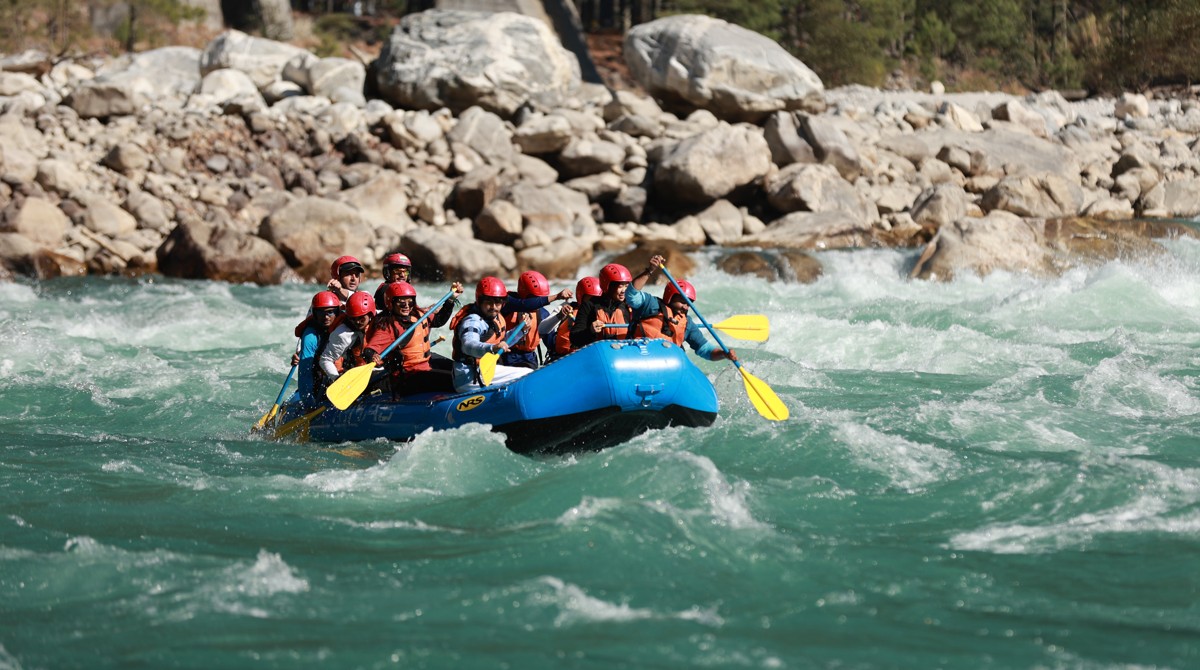
Arunachal Pradesh offers a differentiated tourism proposition across mountains, river valleys, wildlife sanctuaries, monasteries, living tribal cultures and major festivals.
Tourism awards and recognition
Recent travel awards have recognised the State for adventure, mountain and offbeat tourism: ‘Best Adventure Destination’ (IITM Awards, Bengaluru, 2025), ‘Award for Promoting Unexplored Destinations’ (10th International Tourism Conclave & Travel Awards, New Delhi, 2025), ‘Best Mountain Destination’ for Mechuka (India Today Tourism Survey & Awards, 2025), ‘Leader in Offbeat Mountain Destination’ (World Travel & Tourism Festival, 2025), ‘Best Offbeat Mountain Destination’ for Anini (Outlook Traveller Awards, 2024), ‘Best Emerging Destination’ (Lonely Planet Travel Awards, 2019) and ‘Best Emerging Green Tourist Destination’ (Travel & Leisure, 2019).
Fourteen major tourist circuits connect opportunities across nine segments: adventure, wildlife, eco, wellness and spiritual, farm, film, festival, patriotic and nature tourism. The commercial requirement is for quality accommodation, destination experiences, hospitality services and leisure transport that can support longer stays and higher visitor spending.
Investment opportunities
A premium resort proposition at Mechuka, supported by its landscape, 6,000-foot elevation and improving access.
Branded homestay networks that strengthen service standards, booking capability and market access while building on existing State assistance.
Film-production infrastructure at Pasighat, using its scenery and connectivity to attract productions to Arunachal Pradesh.
Wellness and spiritual retreats, with longer-stay and work-from-home tourism as complementary formats.
Wine-tasting and winery experiences around kiwi and rhododendron wines, alongside the State’s planned orchid museums and festivals linked to its 622 orchid species.
Festival tourism and leisure transport, including luxury buses, caravans and river cruises from regional gateways.
Choose your way in
Explore named circuits, documented destinations and listed tourism land.
Select a location
Browse locations
Tourism Circuits & Destinations
The fourteen major tourist circuits — the touring routes visitors actually travel, and so where demand for rooms, transport and experiences concentrates. Filter any circuit to see the districts it crosses.
Districts
Select a district to view its supporting information.
Rivers and national highways are shown as light orientation trails drawn through the settlements each route serves, not as survey-traced lines. Gateway airports in Assam are the arrival points cited in the brochure.
Visitor economy routes
Fourteen major tourism circuits
Location guidance — The mapped circuits show the State’s principal visitor routes. Confirm tourism-site availability through the Industrial Estates page or directly with APIIP.
Hydropower
“India’s Hydropower Hub” — 40% of the country’s total potential, across eight major river basins.
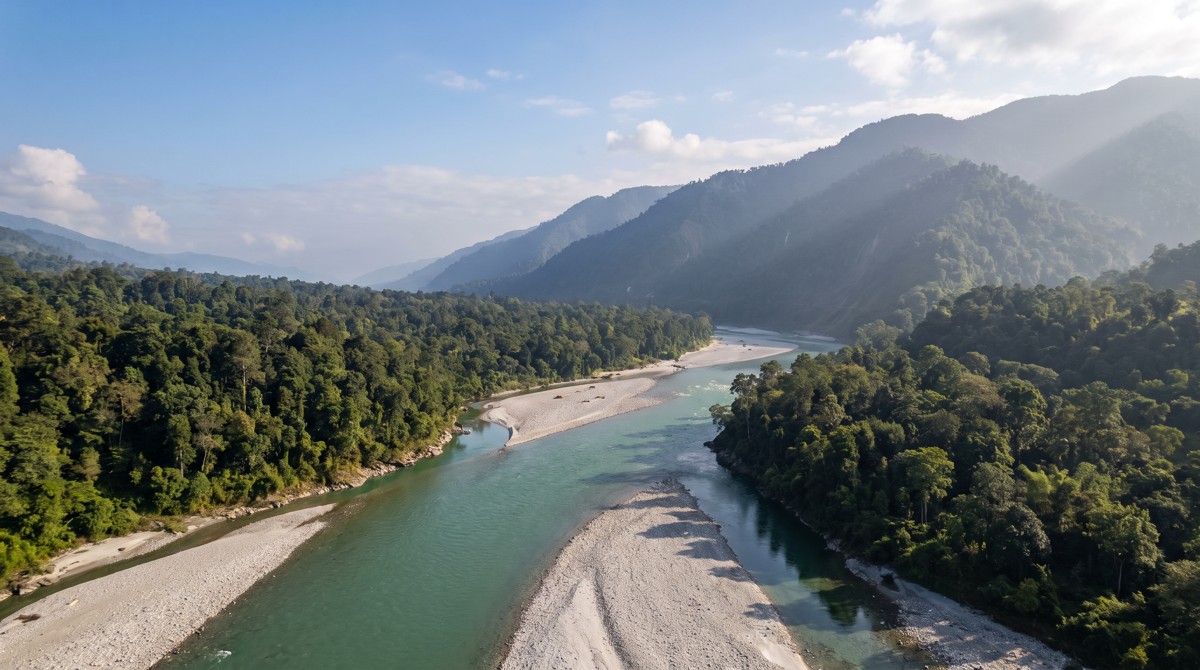
Arunachal Pradesh holds 40% of India’s total hydropower potential and more than 9% of its small-hydropower potential, placing the State among the country’s most significant clean-energy opportunities. Eight major river basins, regular high rainfall and comparatively low population density in project areas define the underlying resource base.
The identified opportunity exceeds 58,160 MW across 188 investible projects, with more than 27 described as available for immediate investment. Generation opportunities are accompanied by requirements in transmission, power evacuation and distribution, supported by established State and central policy frameworks.
Investment opportunities
Participation in identified schemes across eight river basins, including more than 27 projects described as available for immediate investment.
Large-capacity development in the Siang, Subansiri and Dibang basins, which together account for the greatest proposed capacity.
Small and mini-hydropower development, drawing on the State’s share of more than 9% of India’s small-hydropower potential.
Transmission, power-evacuation and distribution infrastructure required to support generation projects across the State.
Project development alongside an operating base that grew from 405 MW in 2015-16 to 1,270 MW in 2022-23, with Lower Subansiri nearing completion and the 2,880 MW Dibang Multipurpose Project underway.
Project structuring informed by completed river-basin studies and established State and central hydropower policy frameworks.
Follow the project pipeline
Explore DHPD reporting groups, compare listed capacity by status, and open sourced project examples.
Select a location
Browse locations
Hydropower Potential by River Basin
Each circle represents one of the eight river basins and is scaled by the proposed megawatt capacity. Size indicates the scale of the identified opportunity only — not land area or project progress.
River basins
Select a basin group to view its supporting information.
Rivers and national highways are shown as light orientation trails drawn through the settlements each route serves, not as survey-traced lines. Gateway airports in Assam are the arrival points cited in the brochure.
Resource scale by basin
Eight major river basins
-
Tawang 2,791 MW · 13 projectsApprox. 3+ available projects
-
Kameng 6,454 MW · 55 projectsApprox. 21+ available projects
-
Dikrong 423 MW · 9 projectsApprox. 2+ available projects
-
Subansiri 11,738 MW · 31 projectsApprox. 7+ available projects
-
Siang 18,653 MW · 47 projectsApprox. 13+ available projects
-
Dibang 10,093 MW · 18 projectsApprox. 7+ available projects
-
Lohit 7,884 MW · 12 projectsApprox. 5+ available projects
-
Tirap 123 MW · 4 projectsApprox. 3+ available projects
Data note — Basin capacities are the brochure’s proposed capacity and the project counts are approximate, as its own table headings state. The rows are reproduced as printed and total 189 projects and 58,159 MW; the brochure’s headline figures are 188 investible projects and over 58,160 MW (pp. 32, 35), while its p. 34 chart gives 58,000 MW and 34.91%. Confirm project-level figures with the relevant department.
Location guidance — River basins indicate resource geography, not project or land boundaries. Confirm current project availability and status with the relevant department.
Textiles & Handicraft
Textiles, handloom and handicraft from 26 major tribes, with eight GI-registered handloom products.
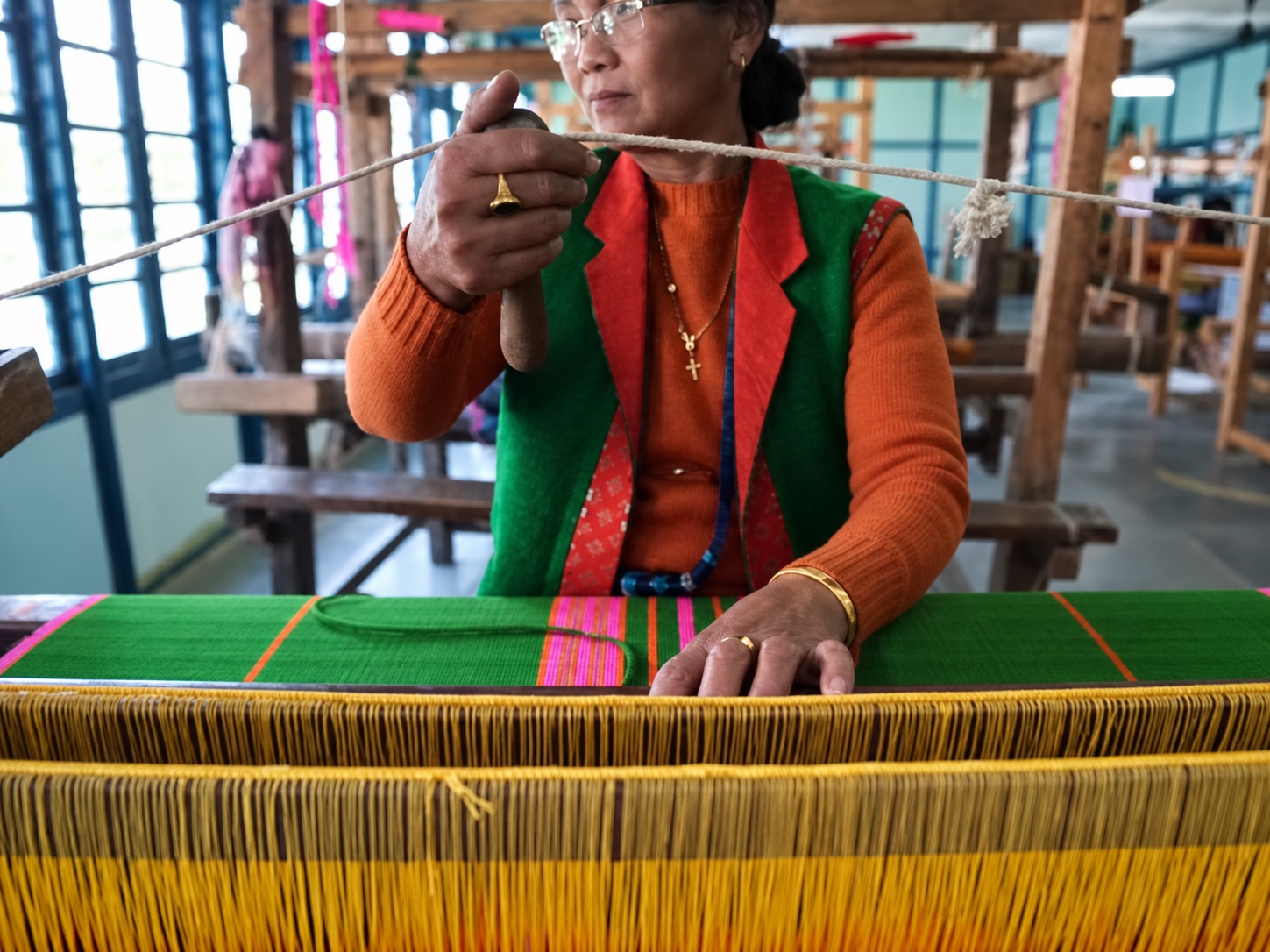
Arunachal Pradesh’s textile and craft economy draws on 26 major tribes and more than 100 sub-tribes, with distinct capabilities in weaving, carpet-making, cane and bamboo work, wood carving, beadwork and painting. Natural materials, established artisanal knowledge and eco-friendly production provide a differentiated foundation for premium products.
Eri silk represents nearly 93% of the State’s silk production and can be produced through multiple crops during the year. The principal scaling opportunity lies in an organic, certified Eri value chain supported by farm mechanisation, contemporary product development and stronger links with Indian and international fashion markets.
Investment opportunities
An integrated organic Eri-silk value chain spanning cocoon production, finished fabrics, apparel and diversified silk products, with organic certification to be developed.
Muga seed farms addressing substantial unmet demand for silkworm seed, supported by healthy plantations and suitable agro-climatic conditions.
Scaled production and market development for hand-knotted carpets, MonShugu handmade paper and eight GI-tagged handloom products.
Organised cane and bamboo production linking raw-material availability and artisanal capability with consumer, interiors and tourism markets.
Woollen hosiery, power-loom and garment units serving school and institutional uniform demand currently supplied from outside the State.
Design studios and production partnerships connecting Arunachal motifs with contemporary products, NIFT, NID and fashion houses.
Commercial pathways
Textile and craft value chains
State-wide pathways for production, design, certification and market development; they are not assigned to particular districts.
Organic Eri silk
Nearly 93% of State silk output, produced through multiple crops a year, with good demand for cocoons, finished products and Eri pupae.
Muga seed farms
Large unfulfilled demand for Muga silkworm seed, with 1,133.12 hectares under silkworm food plantation, of which 161.87 hectares belong to government farms.
Carpets & handloom
Hand-knotted carpets and eight GI-tagged handloom products — shawls, silk fabric, traditional garments and décor.
Cane, bamboo & paper
Abundant raw material and established artisanal capability; MonShugu, the traditional handmade paper of the Monpa people, is GI-tagged, 100% natural and handmade.
Apparel & uniforms
Significant school and institutional uniform demand with no production units in the State — every order is currently filled from outside.
Design & market links
Potential linkages with fashion houses in India and abroad, alongside design intervention through NIFT and NID Ahmedabad.
A note on terms — Eri refers to peace silk, Muga to the golden silk of the North East, and MonShugu to the Monpa community’s handmade paper. Project scope, certification and supply arrangements should be confirmed during investor due diligence.
Education & Skill
Education and skill development, targeting 25,000+ employment and self-employment opportunities in five years.
Demand for education capacity, particularly in rural and remote areas, creates scope for private participation in schools, higher education, vocational training and digital learning. The proposed Education City of approximately 20.23 to 40.47 hectares is intended to accommodate secondary and higher-education institutions of national and international standing.
The SEE (Skill, Education, Employment) Trinity targets more than 25,000 employment and self-employment opportunities over five years. A young bilingual workforce, improving connectivity and demand for electronics, IT-enabled services, BPO and KPO operations broaden the opportunity from institution-building to digital-service capacity.
Investment opportunities
Secondary and higher-education campuses within the proposed Education City, including partnerships with institutions of national or international standing.
Engineering, medical and management colleges addressing the State’s limited supply of higher-education institutions.
Digital classrooms, e-learning platforms, digital libraries, residential schools and teacher-training institutions for wider access to education.
Vocational-training centres aligned with Skill India, SANKALP and the employment objectives of the SEE Trinity.
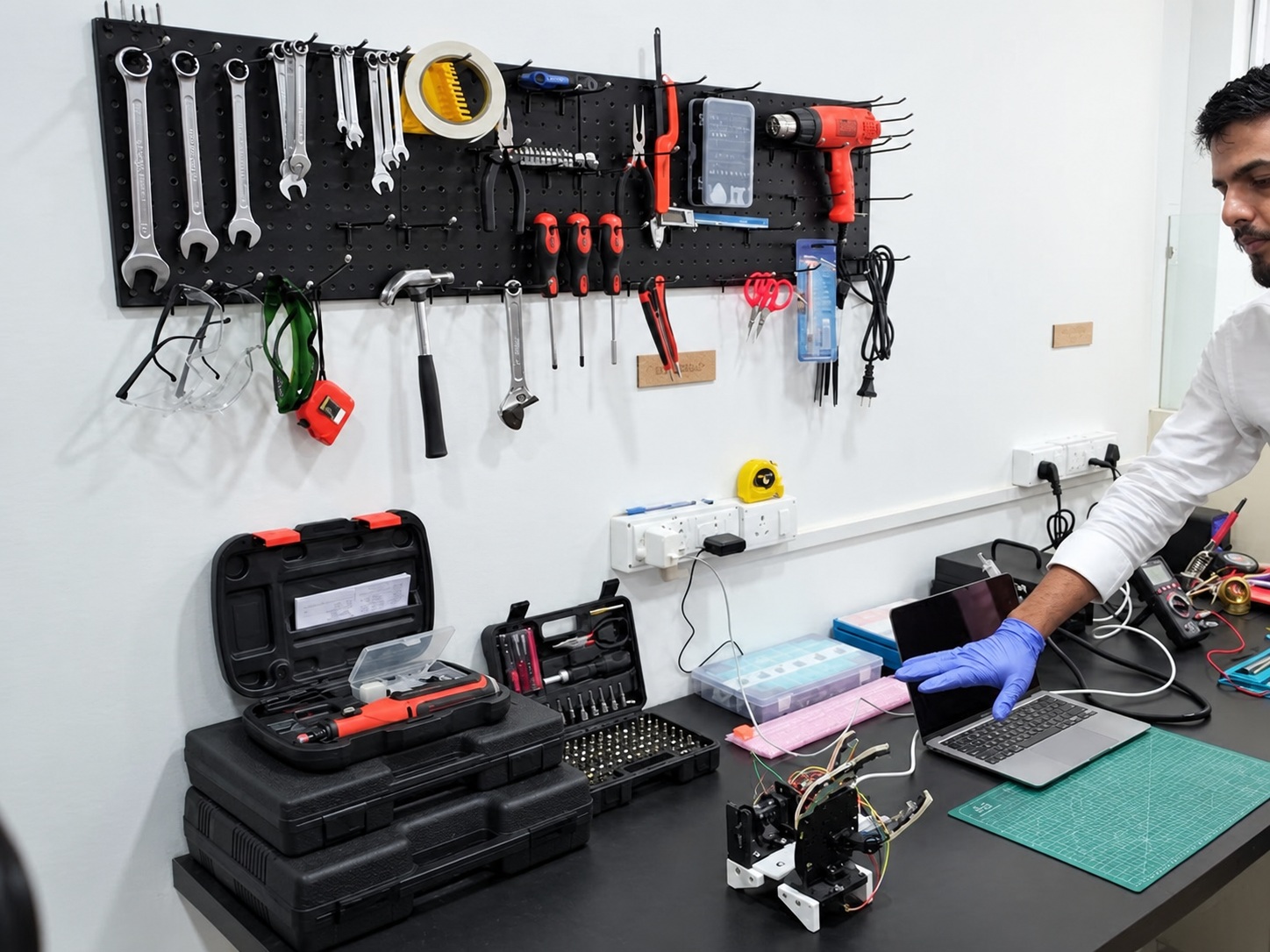
Electronics-hardware and IT-ITES operations supported by improving connectivity and investment in technology, innovation and e-skills infrastructure.
BPO and KPO centres drawing on an educated workforce with fluency in English and Hindi.
Investment pathways
Education, skills and digital pathways
Two connected investment tracks: institution-building and the expansion of skills, technology and digital-service capacity.
Education & skills
Digital transformation
Startup Arunachal
Nature-based entrepreneurship: 46% of incubated startups are women-led, and a DPIIT ‘Top Performer’ in 2022.
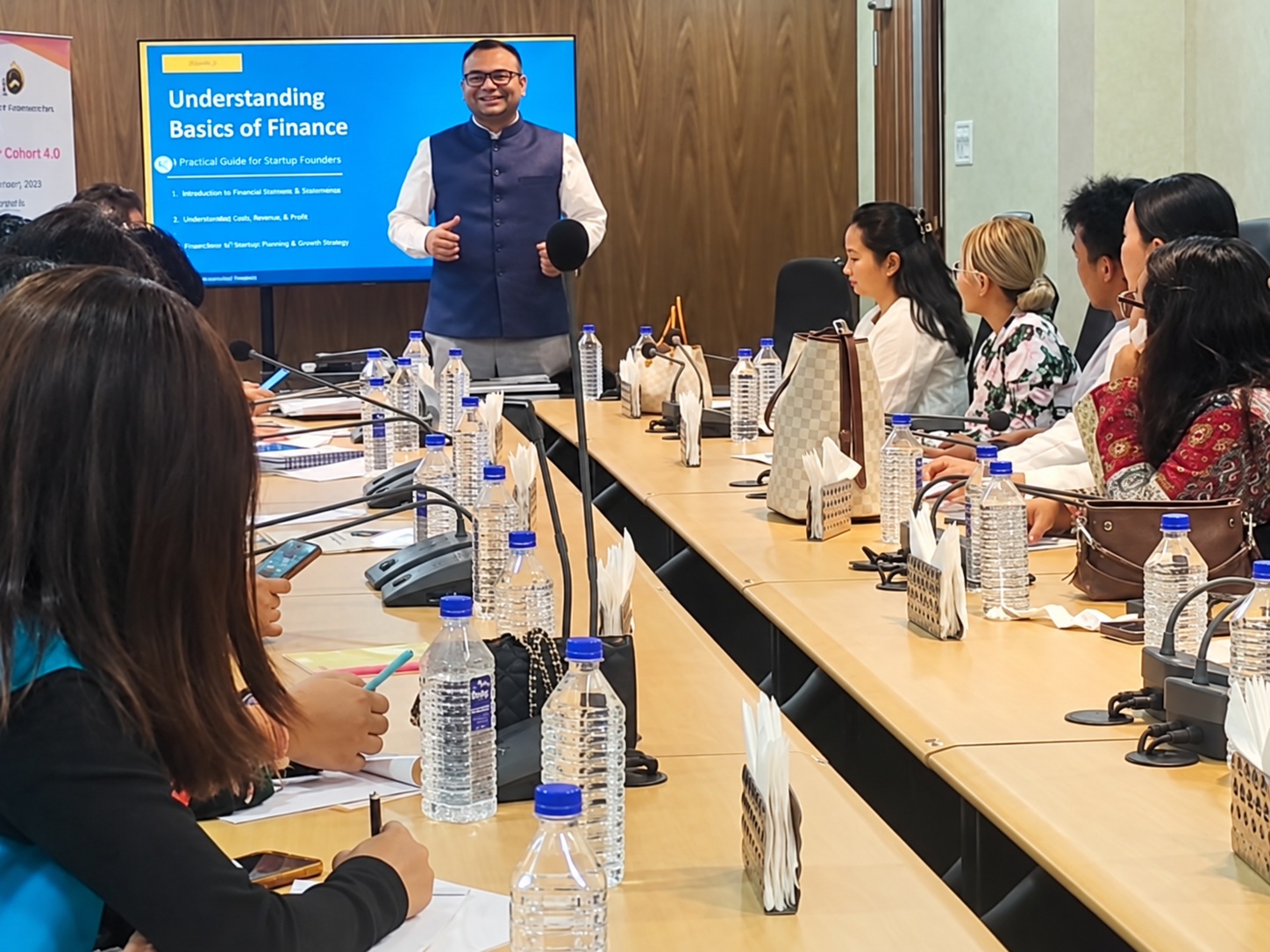
Arunachal Pradesh’s startup ecosystem is developing around grassroots problem-solving, sustainability, diversity and nature-based enterprise. Local knowledge and materials are being translated into ventures across food, craft, fashion, mobility and lifestyle markets, supported by a growing network of ecosystem partners.
Women lead 46% of incubated startups, while the Department for Promotion of Industry and Internal Trade placed Arunachal Pradesh in the ‘Top Performer’ category of the States’ Startup Ranking 2022. The next commercial step is to strengthen product development, operating capability and market access across this emerging enterprise base.
Investment opportunities
Herbal teas, traditional spices and organic agricultural products positioned for wellness and speciality-food markets.
Scalable bamboo consumer products, including drinking straws, crafts and homeware, developed with community and self-help-group producers.
Contemporary apparel, accessories and lifestyle brands that translate tribal design knowledge for premium markets.
Artisanal pottery, handcrafted décor and sustainably produced objects, including the use of manufacturing methods such as 3D printing.
Millet-based food businesses combining nutrition, sustainable cultivation and stronger market access for local farmers.
Mobility and travel-technology services supporting inter-town and inter-city journeys for residents and visitors.
Enterprise distribution
106 startups across fourteen categories
The brochure’s sector distribution is led by agriculture, handloom and handicraft, and tourism, with participation across eleven additional categories.